
When choosing a preschool, parents often focus on factors such as teacher credentials, curriculum, and safety. And while these are essential, one factor frequently gets overlooked, even though it can make just as big a difference: the learning environment.
When you’re looking for a preschool for your child, your mind is on big things: teacher qualifications, the curriculum, and a safe environment. But what if one of the most powerful influences on your child’s development isn’t on the checklist at all?
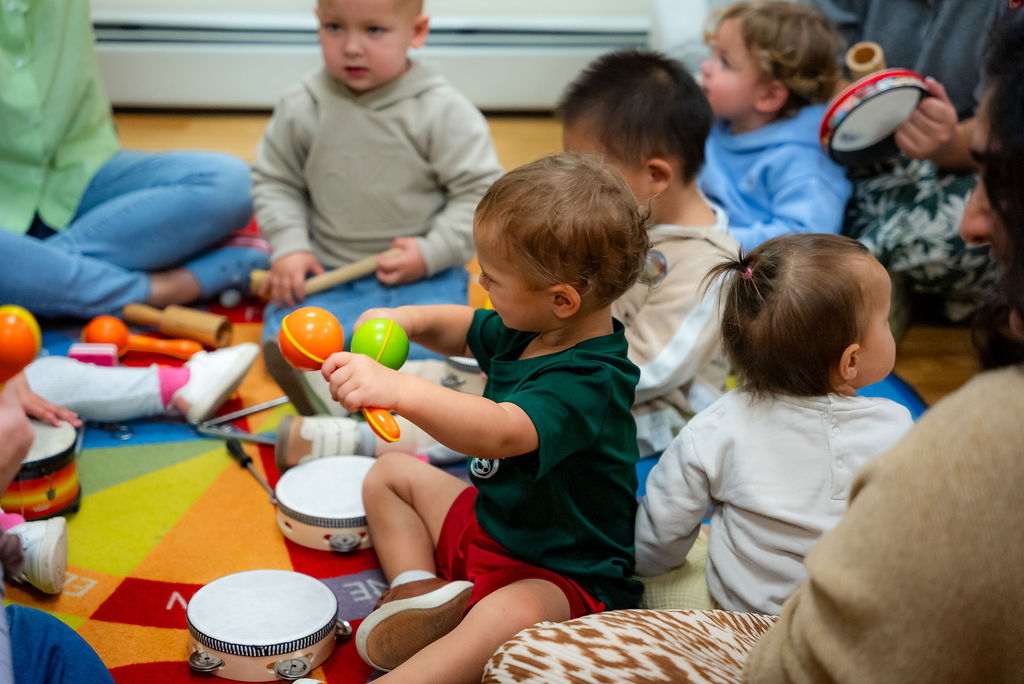
At Artisan, we believe that the classroom itself is a teacher. This philosophy, often called the “third teacher” (with parents and educators being the first two), holds that the physical space where children spend their day is not just a backdrop for learning—it’s an active, dynamic force that shapes their growth. The spaces where children play, create, and discover are carefully designed to nurture their minds, bodies, and hearts.
It’s easy to think of a classroom as a simple container for activities, but years of neuroscience and educational research have revealed a deeper truth. The physical environment plays a crucial role in shaping a child’s developing brain, laying the groundwork for everything from emotional regulation to academic success.
Leading research from the Harvard Center on the Developing Child has shown that the sensory input a child receives from their surroundings directly influences brain architecture. A chaotic, overstimulating environment can trigger a stress response that makes focus difficult, while a calm, intentional space can help a child feel secure and open to new experiences.
This isn’t just a theory; it’s backed by data. A landmark study known as the HEAD Project from the University of Salford in the UK found that classroom design elements, such as natural light, flexible furniture, and intentional color palettes, accounted for nearly 16% of the learning progress in children over a single academic year. This is a powerful finding, showing that the physical space is as influential as a high-quality curriculum.
Further research from publications like Edutopia highlights the importance of subtle design features. Thoughtful space planning, optimal acoustics, and lighting can significantly improve academic performance. A space with good lighting reduces eye strain and fatigue, while good acoustics make it easier for children to listen to their teachers and each other, supporting language development and social skills.
A thoughtfully designed learning environment doesn't just improve academic outcomes; it supports a child’s entire being. Every detail, from the color on the walls to the texture of the materials, is a cue that tells a child what is possible within the space.
Children are naturally sensitive to their surroundings. An environment that feels safe, calm, and welcoming helps them feel secure enough to take risks and explore. The Journal of Environmental Psychology links thoughtful classroom design to stronger focus, emotional well-being, and academic growth. At Artisan, we use natural materials, soft lighting, and carefully arranged spaces to create a sense of tranquility. Cozy reading nooks and quiet corners offer a retreat from group activities, giving a child a place to self-regulate and recharge. When a child feels safe, they are more resilient, more confident, and more willing to try new things.
Children learn best from each other. Our classrooms are designed to encourage collaboration and communication. We avoid fixed seating and rigid arrangements, opting instead for flexible layouts that can be easily rearranged for group projects, one-on-one discovery, or independent play. Our open-ended materials, like wooden blocks and art supplies, invite children to negotiate, share ideas, and build shared worlds together. This organic interaction lays the foundation for empathy, conflict resolution, and the deep friendships that are a hallmark of early childhood.
Every corner of our classroom is a learning lab. We don’t just have a “play area”; we have dedicated zones that are curated to inspire specific types of inquiry. The science center is stocked with magnifying glasses, natural specimens, and simple tools that invite children to explore. The block area is a dynamic space for practicing engineering, math, and spatial reasoning. By giving children the freedom to move between these zones, we allow them to follow their own curiosity and develop a sense of self-directed learning.
Imagine walking into one of our classrooms on a Tuesday morning. Sunlight streams through large, arched windows as children arrive, ready to begin their day. There’s a quiet energy as some children gather in a circle for a morning meeting, while others gravitate toward a child-sized easel to paint.
In the block area, a small group of preschoolers is building a castle, collaborating on a design they drew themselves. They are negotiating which block to use and where to place it, learning complex lessons about balance and cooperation. In the writing center, a child sits at a low table, carefully drawing letters from their name, while a friend sounds out a word from a picture book in the library nook.
Later in the morning, the children venture outdoors. The curriculum extends beyond our classroom walls, so children are able to tend to our garden, watering seedlings, checking for new growth, and learning firsthand how science, patience, and responsibility connect. This isn't just a break; it's a living lesson in environmental stewardship.
In the afternoon, the children return for quiet time, with some curled up in a cozy beanbag chair with a teacher reading to them, while others lie on mats, simply resting. It's a structured moment of calm in a busy day, showing that rest is just as important as play.
At Artisan, we take a holistic approach to education. Our mission is to prepare children for a lifetime of learning, and our environment is our most powerful tool.
We have created an environment that is deeply connected to nature. Our spacious classrooms are filled with plants and natural light. Our materials are made from natural wood, stone, and wool whenever possible. This biophilic design, a principle that suggests humans have an innate desire to connect with nature, has been proven to reduce stress, improve focus, and boost a child's overall sense of well-being. We’ve seen the difference firsthand: our children are calmer, more joyful, and more present in their learning.
One of the most loved parts of the Artisan experience is our gardening program. With the guidance of our in-house gardener, children plant, nurture, and harvest fruits, vegetables, and flowers, learning complex lessons about science, nutrition, and cause and effect. They learn that patience is rewarded and that hard work leads to a bountiful harvest. These experiences give children a sense of ownership, pride, and connection to the world around them that simply cannot be learned from a textbook.
Many of our campuses are listed on the National Register of Historic Places, and we take great pride in maintaining their original design while incorporating eco-friendly updates. This unique blend of history and sustainability gives children inspiring spaces that feel both authentic and meaningful. It’s a powerful lesson in respecting and preserving what already exists, teaching children that beauty and value aren’t always about what’s new.
At Artisan, we see early childhood as more than just a waiting room for "real school." These years are the foundation for everything to come. By surrounding children with thoughtful spaces, meaningful experiences, and a community that believes in their potential, we help them build the habits of mind and heart that last a lifetime.
Parents often tell us the difference they see is more than just academic. Their children become calmer, more joyful, and more curious, excited to share what they've discovered each day. It’s proof that when learning environments are designed with care, children not only grow, but also thrive.
If you’re seeking more than childcare, and you want a preschool where your child is truly seen, supported, and inspired, we’d love to welcome you. Schedule a tour today and experience how the environment itself becomes a “third teacher” at Artisan.